North Central Province
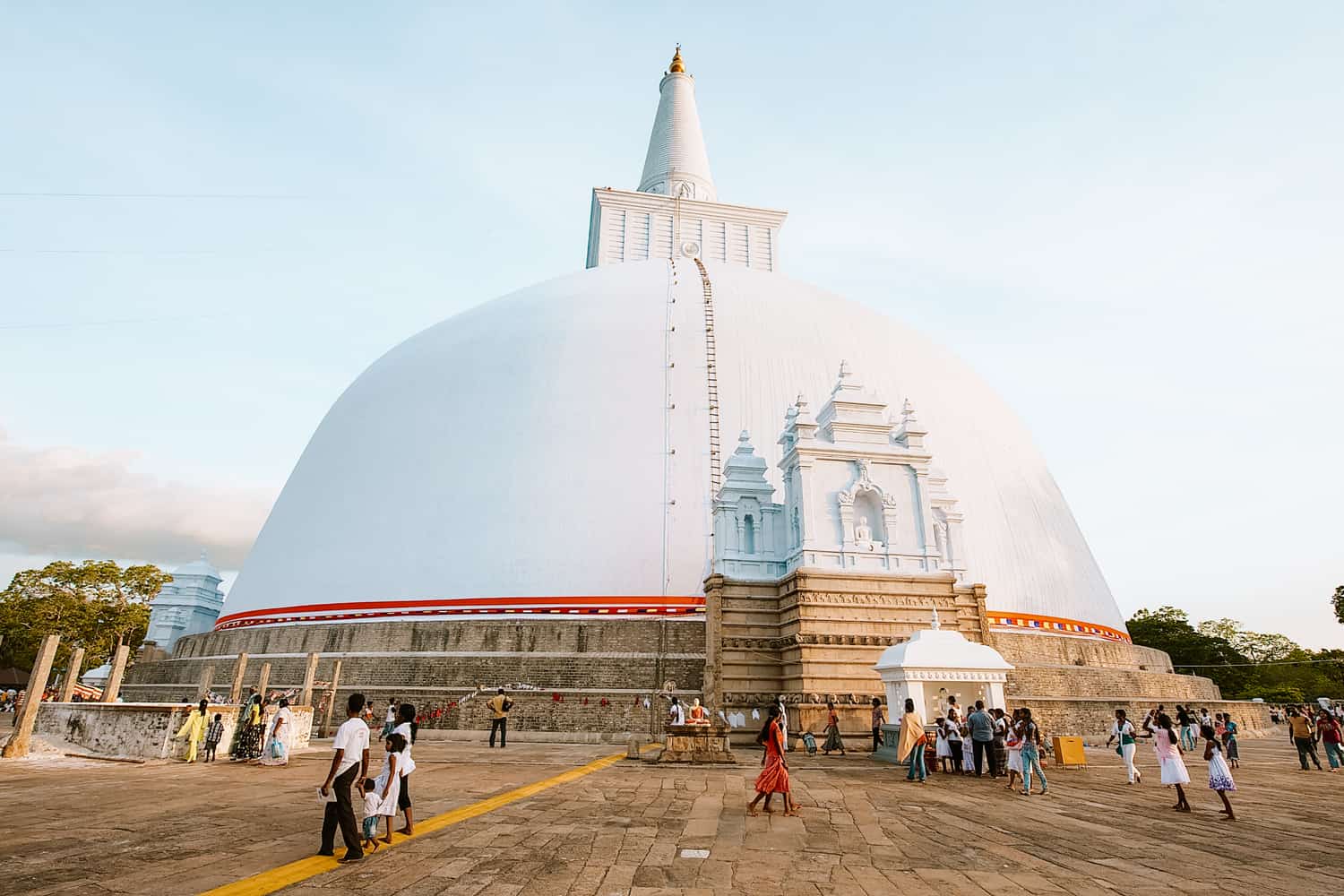
The ancient sacred city and first capital of Sri Lanka.
Ruwanwelisaya, Jaya Sri Maha Bodhi, Ancient Ruins
Anuradhapura is the spiritual and historical epicenter of Sri Lanka. Founded in the 5th century BC, it served as the capital of the Sinhalese Kingdom for an astonishing 1,500 years, making it one of the longest-standing, continuously inhabited centers of political power in world history. Today, the ancient city is a massive UNESCO World Heritage site, sprawling across 40 square kilometers of lush forest, ancient reservoirs, and monumental ruins.
The scale of Anuradhapura is difficult to comprehend until you see it in person. The city was a marvel of the ancient world, featuring monastic complexes that housed over 10,000 monks and hydraulic engineering that defies modern understanding. The skyline of the ancient city is dominated by massive bell-shaped stupas (Dagobas). The most famous is the Ruwanwelisaya, a towering white dome standing 103 meters tall, guarded by a wall of hundreds of carved elephants. Nearby stands the Jetavanaramaya, which, at the time of its completion in the 3rd century, was the third tallest structure on earth, surpassed only by the two great pyramids of Giza.
Beyond the monumental architecture, Anuradhapura is home to the most sacred object in Sri Lanka: the Jaya Sri Maha Bodhi. This magnificent fig tree was grown from a cutting brought from India in 288 BC from the exact tree under which Gautama Buddha achieved enlightenment. It is the oldest historically authenticated, continuously documented tree in the world, heavily guarded and worshipped daily by thousands of pilgrims.
You need to travel to Anuradhapura because it is the foundational bedrock of Sri Lanka. If you are fascinated by ancient civilizations, lost cities, and architectural megaliths, this is one of the premier archaeological sites in Asia. The scale of the brick stupas provides a sense of awe comparable to seeing the pyramids of Egypt or the temples of Angkor Wat.
Unlike many ancient ruins that feel like dead museums, Anuradhapura is beautifully alive. It remains a thriving, active center of Buddhist worship. Watching lines of devotees offering vast swathes of orange fabric to wrap around the base of the giant stupas, or sitting quietly under the shade of the 2,300-year-old Bodhi tree while monks chant in the background, connects you instantly to millennia of unbroken human tradition.
Exploring Anuradhapura requires more logistical planning than physical exertion due to the sheer size of the site.
The ideal months to visit Anuradhapura are from January to April or from July to September, avoiding the heaviest monsoon rains that can flood the archaeological park.
On a daily basis, timing is critical. You should enter the site right at sunrise, around 6:30 AM to 7:00 AM. Exploring in the early morning means you beat the extreme midday heat, you avoid the worst of the tourist crowds, and you can comfortably walk barefoot around the stupas before the ground heats up. By 12:30 PM, the heat becomes oppressive, making it the perfect time to retreat to your hotel for a long lunch and a swim, returning to the ruins around 4:00 PM for the softer afternoon light and sunset over the ancient reservoirs.
January to April
Pass/ticket required for ruins