Kandy
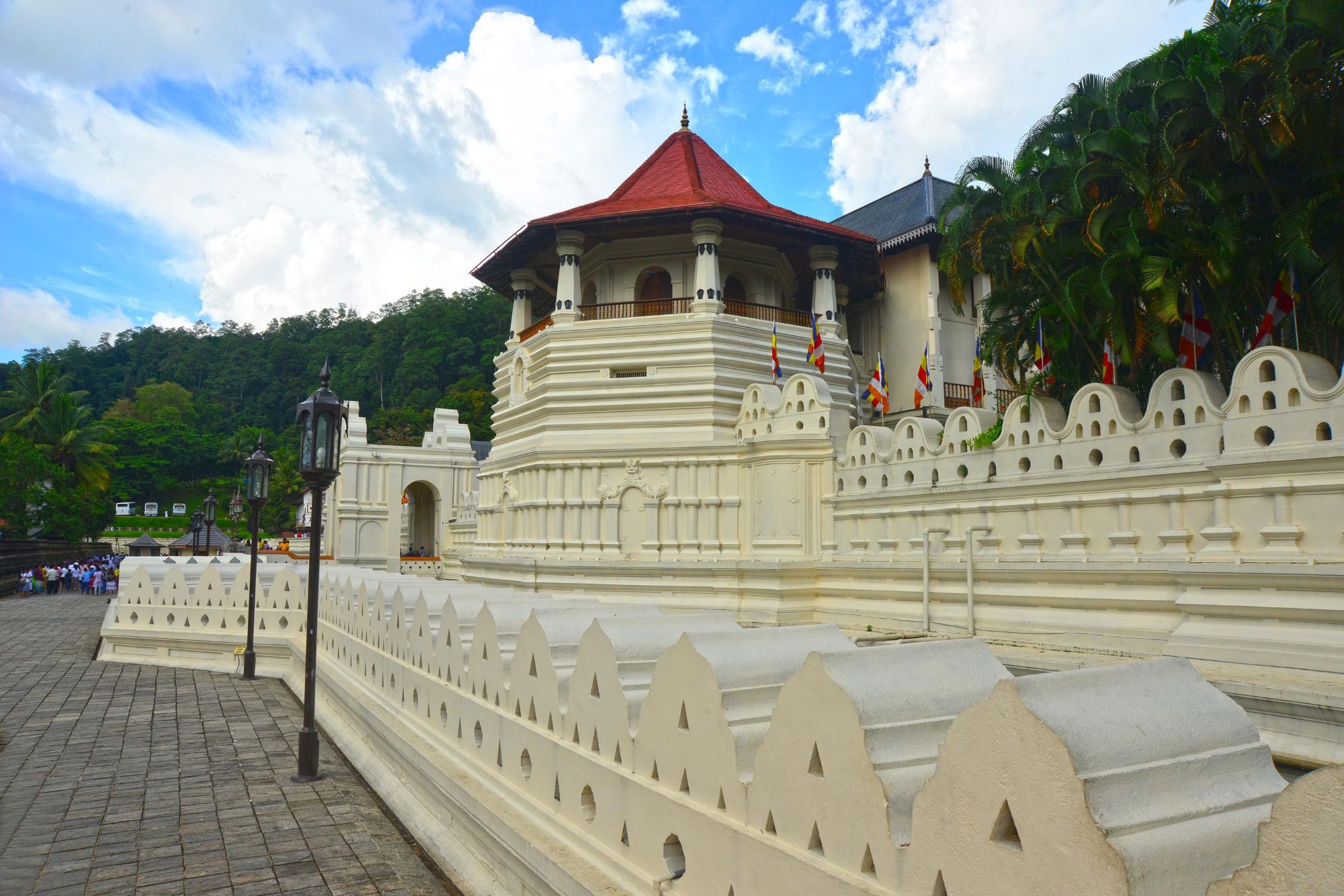
Sri Lanka's most important Buddhist shrine.
Sacred Tooth Relic, Golden Canopy, Royal Palace Complex
The Sri Dalada Maligawa, globally known as the Temple of the Sacred Tooth Relic, is the most revered and important Buddhist shrine in Sri Lanka, and one of the most sacred pilgrimage sites in the entire Buddhist world. Located directly adjacent to Kandy Lake, the temple is housed within the heavily fortified royal palace complex of the former Kingdom of Kandy.
The temple is built to house a single, profound artifact: the left canine tooth of Gautama Buddha. According to legend, the tooth was snatched from the Buddha's funeral pyre in India in 543 BC and smuggled into Sri Lanka hidden in the hair of Princess Hemamali in the 4th century. Historically, the relic held immense political power; it was believed that whoever held the tooth held the divine right to rule the island. As a result, the relic was moved secretly from capital to capital over the centuries, finally coming to rest in Kandy.
The architecture of the temple is a stunning example of Kandyan craftsmanship. The main shrine features intricately carved wooden pillars, silver and ivory doors, and a spectacular golden canopy that covers the inner sanctum. The tooth itself is not visible to the public; it is kept under a golden lotus flower, which is encased inside seven nested, gem-studded golden caskets shaped like stupas.
Visiting the Temple of the Tooth is not just a sightseeing stop; it is an immersion into the living, breathing spirituality of Sri Lanka. You need to travel here to witness the unbreakable devotion of the local people. Watching hundreds of pilgrims dressed in pure white, bearing offerings of fragrant lotus and frangipani flowers, is a deeply moving experience regardless of your personal beliefs.
The temple is also a living museum of Sri Lankan history. The surrounding complex includes the Royal Palace, the Audience Hall with its famous wooden pillars, and several smaller shrines. The level of detail in the art, from the painted ceilings to the moonstones at the entrances, represents the absolute pinnacle of traditional Sinhalese artistry.
Visiting the Temple of the Tooth is very easy physically, but requires strict adherence to cultural rules.
The temple is open all day, but the absolute best time to visit is during the Thewawa (Pooja) ceremonies. These ritual offerings take place three times a day: around 5:30 AM, 9:30 AM, and 6:30 PM.
During the Pooja, the heavily guarded doors of the inner sanctum are opened, and the temple fills with the intense, echoing sounds of traditional Hewisi drumming and the blowing of conch shells. The atmosphere transforms from quiet reverence to powerful, overwhelming energy. The evening Pooja (6:30 PM) is particularly atmospheric as the temple grounds are beautifully illuminated against the night sky. If you prefer a quiet, contemplative visit to examine the architecture, visit between the ceremony times.
Year-round
Strict religious dress code, remove shoes